I recently reviewed Wayne Rowland’s Disease Symptom Elimination Program, and I have to admit, the sheer scope and layered design of the system is unlike anything I’ve personally encountered in the alternative-health world.

What immediately stood out to me was that this is not just another “take this supplement and hope for the best” type of protocol. Wayne appears to have spent years building multiple systems that eventually evolved into one comprehensive framework. Prior to creating the Disease Symptom Elimination Program, he reportedly maintained a dedicated parasite cleanse and deworming protocol, along with a separate microbiome- and immune-rebuilding program. According to the material I reviewed, the newer program combines these systems into a broad-spectrum hybrid approach intended to address parasites, worms, gut imbalance, pathogens, heavy metals, fungi, molds, bacteria, and viruses simultaneously.
One of the things I found most fascinating was Wayne’s insistence that meaningful recovery efforts should begin with parasite cleansing and deworming. Whether one agrees with every claim or not, there is a certain internal logic to his approach. His position is that if the body is overloaded with parasites and competing pathogens, then microbiome rebuilding and immune restoration become significantly more difficult. His foundational cleanse reportedly spans three months, followed by a one-month yearly maintenance cycle intended to prevent reinfestation and overgrowth.
What makes the protocol especially intriguing is the strategic layering. Rather than relying on a single intervention, Wayne’s system rotates multiple approaches simultaneously. The deworming section reportedly alternates compounds such as Ivermectin, Fenbendazole, and Pyrantel because each operates differently against worms and parasitic organisms. Wayne’s rationale, according to the reviewed material, is that rotating mechanisms may reduce the likelihood of resistant organisms adapting to a single method over time.
The Rotational Deworming Strategy
One of the most compelling aspects of Wayne’s program is the way the dewormers are layered to overlap coverage while attacking organisms through different mechanisms. According to the material reviewed, this rotational approach was adopted to reduce the possibility of creating resistant “superworms.”
| Dewormer | Reported Primary Targets | Reported Mechanism or Specialty |
| Ivermectin | Strongyloides stercoralis (threadworm), Onchocerca volvulus (river blindness worm), Wuchereria bancrofti, Brugia malayi, Ascaris lumbricoides | Commonly associated with eliminating worms and arthropods |
| Fenbendazole | Roundworms, pinworms, hookworms, whipworms, dog/cat roundworms | Reportedly disrupts microtubules within worms |
| Pyrantel | Pinworms, roundworms, hookworms | Often regarded as highly effective against intestinal worms |
| Praziquantel (optional addition) | Tapeworms such as Taenia saginata, Taenia solium, Diphyllobothrium | Targets tapeworm-related infections specifically |
According to Wayne’s philosophy, rotating these compounds while simultaneously incorporating herbal agents like wormwood, black walnut hull, clove, garlic, and pumpkin seed creates a constantly shifting environment that may make adaptation more difficult for parasites and worms.
Beyond pharmaceutical dewormers, the protocol also incorporates more traditional herbal agents such as wormwood, black walnut hull, clove, garlic, and pumpkin seed. Wayne reportedly views these as less aggressive than the primary dewormers, but potentially useful for creating additional environmental stressors against unwanted organisms while varying the overall assault pattern.
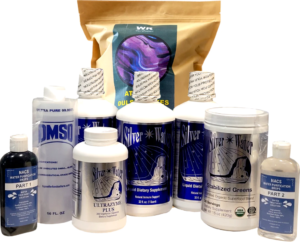
Another aspect that makes this protocol stand apart is the alternating use of Wayne’s Tesla-powered, Rife-frequency-enhanced “Silver Water” alongside chlorine dioxide water purification drops. According to the review materials, Wayne recommends alternating the two rather than using them simultaneously, because chlorine dioxide may neutralize the silver solution. The scheduling itself is surprisingly methodical, involving iodine first thing in the morning, followed by silver and DMSO, then carefully timed chlorine dioxide intervals throughout the day, all spaced around meals and digestion windows.
Silver Water vs. Chlorine Dioxide
Why Wayne Alternates Both
What makes this portion of the protocol particularly interesting is that Wayne reportedly views Silver Water and chlorine dioxide as complementary rather than competing tools. Each appears intended to fill different roles within the broader system.
| Wayne’s Silver Water | Chlorine Dioxide Water Purification Drops |
| Typically paired with DMSO in Wayne’s protocol | Used separately from silver due to neutralization concerns |
| Intended for broader ongoing systemic support | Used in carefully timed intervals throughout the day |
| Remains active longer within the body according to Wayne’s explanations | Reportedly dissipates relatively quickly after use |
| Frequently associated by users with bacteria, fungi, molds, and viral challenges | Commonly discussed for pathogen reduction and purification applications |
| Incorporated morning, afternoon, and before bed | Typically rotated hourly between silver servings |
| Used as part of Wayne’s long-term layered strategy | Used as a repeated short-duration oxidative approach |
The material I reviewed also included extensive lists of organisms reportedly associated with both approaches. Wayne’s Silver Water was described as being widely discussed in relation to organisms such as Staphylococcus aureus, Streptococcus species, E. coli, Pseudomonas aeruginosa, Klebsiella pneumoniae, Salmonella, and Candida-related fungal issues. Chlorine dioxide, meanwhile, was described as being known for broad purification and oxidation applications involving bacteria, fungi, molds, and viral contaminants.
Whether or not someone fully embraces every component, I can understand why followers of Wayne’s work often describe the system as “comprehensive.” The structure appears designed around continuous rotational pressure against a wide variety of organisms and environmental burdens while simultaneously attempting to support microbiome rebuilding and immune function.
What I personally found most compelling was the strategic thinking behind the protocol itself. Wayne doesn’t appear to frame the body as dealing with a single isolated issue. Instead, he seems to approach chronic illness as a layered ecosystem problem involving parasites, fungi, bacteria, environmental toxicity, and immune dysfunction all interacting at once. That systems-based mindset is part of what makes the protocol feel so ambitious.
Another thing that stood out during my review was how strongly the program emphasizes persistence and consistency. This is not presented as a quick fix or overnight miracle. The protocol reportedly spans months, requires strict timing, rotational scheduling, and annual maintenance phases. That alone suggests that Wayne sees recovery as a process of steadily reducing biological burden rather than masking symptoms temporarily.
To be clear, many of the claims associated with alternative health systems remain controversial, and individuals should carefully research any protocol, especially those involving pharmaceuticals, supplements, or experimental wellness approaches. But from a purely structural standpoint, Wayne Rowland’s Disease Symptom Elimination Program is one of the most intricate and aggressively layered alternative-health protocols I have reviewed.
What ultimately impressed me most was not necessarily any single ingredient or remedy, but the architecture of the program itself. There is a clear attempt to think several steps ahead: rotating methods, varying mechanisms, supporting elimination pathways, addressing microbiome balance, and maintaining long-term follow-up rather than relying on short-term symptom suppression. Whether viewed as innovative, unconventional, or controversial, it is undeniably a highly engineered system that reflects years of experimentation and refinement.
Leave a Reply