When I see someone dealing with varicose veins, I don’t just see a surface issue. I see a sign. The body is always communicating, always showing you where something is not flowing the way it was designed to, and when that flow gets disrupted long enough, the body expresses it in ways you can see, and sometimes feel.

I tell you this: if you’re dealing with varicose veins, something in your system is out of balance. It doesn’t mean you’re broken; it just means something needs attention, and the good news is this is something you can begin addressing yourself.
Before anything else, I like to begin with a foundational approach, something that supports the body from the inside.

This simple routine can go a long way:
-
- 1 ounce of Silver Water in the morning
- 1 ounce in the evening before bed
If you’ve been doing that, you don’t have varicose veins. Consistency matters here. Not intensity; consistency.
You’re not trying to overwhelm the body. You’re supporting it. Giving it something it can use, day after day, to begin restoring balance.
Now let’s talk about working directly with the area itself.
Varicose veins are, at their core, a mechanical and functional issue, circulation not doing what it’s supposed to do. So it makes sense to address the area locally as well.
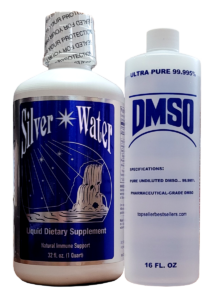
A basic approach that many people use involves creating a simple topical mixture:
-
- Equal parts of a silver-based solution
- Combined with DMSO (a carrier derived from natural sources)
Now, if you don’t know, DMSO is known for its ability to carry substances through the skin barrier. It’s often discussed as a way to deliver compounds directly to targeted areas without injections or more invasive methods.
The application process is simple:
-
- Mix equal parts of the two components
- Apply to the affected area
- Gently rub for 8 to 10 minutes
- Rinse the area clean
This can be done three times per day.
No drama. No complexity. Just steady, repeated attention.
Warning:
Here’s where many people go wrong. They start something, see improvement, and then stop too soon.
If you apply a routine like this and begin to see results, let’s say after three weeks, that’s not your finish line. That’s your halfway point.
A simple rule to follow: Continue for the same amount of time it took to see results.
So if improvement shows up after three weeks, continue for another three weeks. That’s how you reinforce the change and give the body time to stabilize. After that, maintaining your internal routine becomes your long-term support.
Now, keep this in mind: Not all varicose vein situations are the same.
For some people, it’s a localized circulation issue. For others, it may be connected to:
-
- Lifestyle patterns
- Long periods of standing or inactivity
- Nutritional imbalances
- Systemic strain on the body
If those underlying factors aren’t addressed, you may find yourself repeating the same cycle: improving, then regressing, then starting over again.
That’s why, in more complex cases, it can be helpful to take a broader look at your habits, your environment, and your daily routines. Sometimes a little guidance goes a long way in identifying what’s really driving the issue.
Options:
There are, of course, medical procedures available for varicose veins. Many people choose that path, and that’s their decision, but it’s worth remembering, you often have more than one option.
For some, a simple, consistent, self-directed approach can be a practical place to begin. It allows you to engage with your own health, observe how your body responds, and take part in the process rather than handing it off entirely.
At the end of the day, this isn’t about quick fixes. It’s about restoring function. It’s about giving the body what it needs, removing what interferes, and allowing natural processes to do what they were designed to do.
Start simple. Stay consistent. Pay attention. And most importantly, work with your body, not against it.
Disclaimer
This article reflects personal perspectives and general wellness concepts. It is not intended as medical advice. Always consult a qualified healthcare professional before beginning any new health-related practice, especially when dealing with existing conditions.
Leave a Reply